
Travel Tips · Travel pace & companions
China Travel with Parents: Plan Less Walking and More Time to Enjoy It
You want to share the Great Wall or the Terracotta Warriors with your parents—and still enjoy an unhurried dinner afterwards. Start by finding out how long they like walking, which steps they would rather avoid and whether they want a hotel break. For travellers aged 50–65, age alone does not tell you their fitness or interests. Use the decisions below to plan the days your family actually wants to take.
Save this quick checklist
-
Start with preferences
Walking, steps and rest matter more than age alone.
-
One main visit
Protect a rest window before adding more stops.
-
Fewer hotel changes
Arrival and transfer days need their own time.
-
Save the details
Everyone keeps the hotel and meeting point offline.

On this page
1. Ask six questions before choosing destinations
Rather than asking only “Can you walk?”, think together about a recent outing they enjoyed. How long did they walk? When did they want to sit down? Did they feel ready to go out again the next morning? Turn the answers into practical preferences.
| What to ask | What to put in the plan |
|---|---|
| How long is a comfortable walk without stopping? | A target for each continuous walking section and a place to sit |
| Are stairs up, stairs down or long slopes harder? | Sections to avoid, including steps beyond a cable-car station |
| Would you prefer a room break or a seated lunch break? | Hotel location and the time to restart the afternoon |
| How early do you like leaving, and when do you want to be back? | First and last activities, with evening outings treated separately |
| Do heights, boats, long tunnels or winding roads bother you? | Alternatives agreed before reaching the attraction |
| Which two experiences do you most want? | Priorities to protect and less important visits to drop |
“About 30 minutes of continuous walking, then a seated break” could be one family member’s stated preference. It is not a health standard for everyone. If someone uses a wheelchair or mobility device or needs assistance, discuss the device dimensions and specific help with attractions, hotels and transport operators before booking.
2. Choose places by how the day works
For a first trip together, consider enjoying one region properly before adding more cities. These are planning trade-offs, not a single recommended route for every older traveller.
| Experience | What needs planning | How to leave room |
|---|---|---|
| Beijing palaces and the Great Wall | Long palace walks, wall steps and the countryside return journey | Separate the palace and Wall days; avoid committing to a late outing after the Wall |
| Xi’an history and food | The Terracotta Warriors transfer, standing in halls and city-wall steps | Make the Warriors the priority that day; choose a wall visit or evening food streets according to energy |
| Shanghai river views and neighbourhoods | Metro changes, station exits and the actual riverside walk | Pick a defined section and meeting point, with a vehicle return option |
| Zhangjiajie peaks | Internal buses, cable-car queues and walking beyond stations | Give the Forest Park and Tianmen Mountain separate days; identify shorter alternatives |
| Gulangyu and Minnan culture in Xiamen | Ferry connections, stone paving, slopes and summer exposure | Travel light on the island, choose one main walk and arrange storage for large luggage |
| A Yangtze cruise | Embarkation access, shore-excursion steps, cabins and lift coverage | Check the particular ship and excursions; identify opportunities to rest on board |
A cable car does not mean a visit involves little walking; a private car cannot necessarily reach the entrance. Ask about all the links: hotel lobby to attraction entrance, shuttle stop to boarding point, upper station to viewpoint, then the route back to the vehicle.
Match your dates to your activities as well as the destination. Outdoor visits depend on heat, rain, snow, wind and visibility. Keep a half-day that can be exchanged when conditions change. Use our China travel seasons guide for regional choices, then check forecasts and operating notices before travelling.
3. A more manageable Forbidden City day
This is an illustrative plan, not a customer case or a reserved schedule. It assumes normal opening, a morning admission booking and a family who wants shorter continuous walks. Allowances cover queues, rests and city transport; adjust them to the actual reservation, open areas and traffic.
| Time | A day that can become overloaded | A more flexible version |
|---|---|---|
| 08:00–09:00 | Rush out and find breakfast on the way | Eat first; check documents, admission and the day’s pickup arrangement |
| Morning | Add Tian’anmen Square and try to cover every palace gallery | Focus on the Forbidden City, following selected highlights towards the exit, with planned rests |
| 12:00–13:30 | Immediately climb Jingshan before a late lunch | Have lunch in the agreed exit-side area; sit down before deciding on the afternoon |
| 13:30–15:30 | Continue to another large attraction | Leave a hotel-rest window rather than adding a stop because it looks nearby |
| Early evening | Stack a night market, show and skyline visit | Choose one short nearby outing if wanted, or eat close to the hotel |
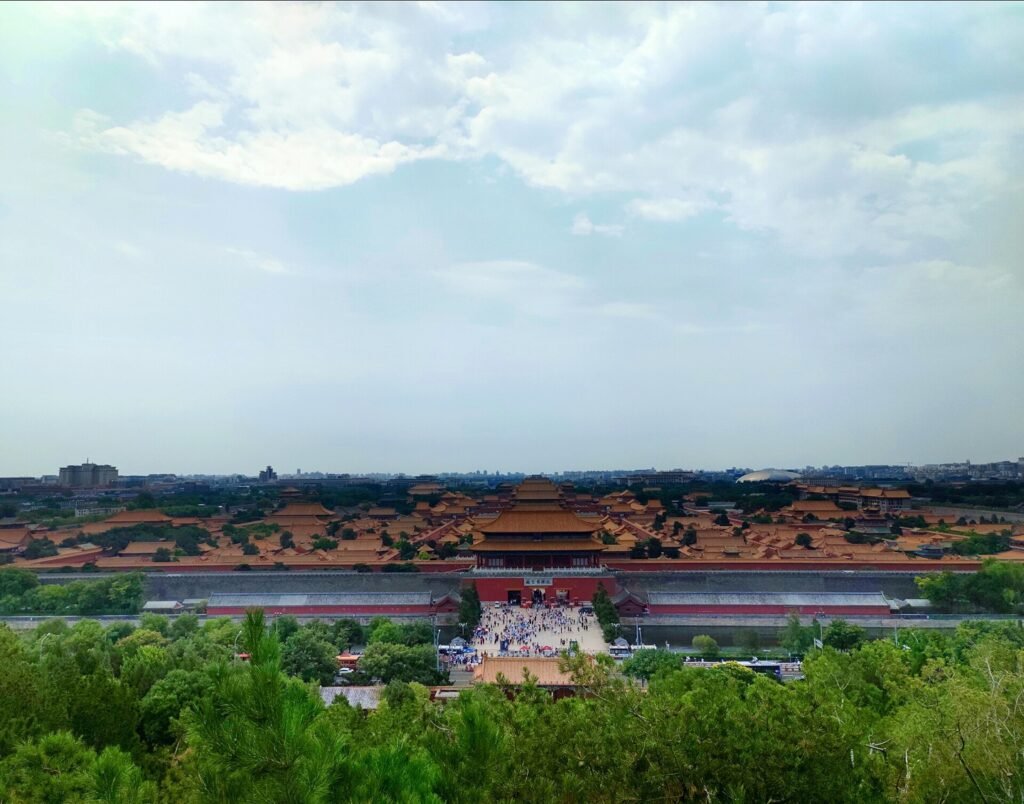
The entrance and exit are different: do not reuse the morning drop-off as the return meeting point. The Palace Museum admits visitors through the Meridian Gate, with exits at the Gate of Divine Prowess or East Prosperity Gate. Check the official visitor guide and booking instructions. Agree with your driver on a permitted pickup location on the correct side and save its Chinese name and a screenshot.
If lunch leaves everyone ready to stop, drop the afternoon outing. If returning to the hotel would itself be a long detour, a seated restaurant or café break may work better before going back. Plan rest around the actual neighbourhood and route, rather than insisting on a cross-city hotel return every day.
4. Eight days without constantly moving luggage
Treat arrival, intercity travel and departure as days with their own time demands. One 8-day, 7-night two-city example uses four nights in Beijing and three in Xi’an, with only one hotel change. It is not a fixed tour for sale; substitute cities to suit flights and interests.
- Day 1: Arrive in Beijing, check in and rest. A late arrival needs no sightseeing.
- Day 2: Make the Forbidden City the focus, with afternoon rest time. Adjust the order to actual opening days.
- Day 3: Visit the Great Wall, having chosen ascent, descent and the intended walking section beforehand.
- Day 4: One city experience and a flexible half-day. Keep the option to exchange this with the Wall day for weather.
- Day 5: Travel to Xi’an: checkout, station access, train journey and hotel arrival. Leave the evening undecided.
- Day 6: Focus on the Terracotta Warriors; add another stop only if the family wants it.
- Day 7: One city historical experience and a meal, leaving time for a favourite neighbourhood or rest.
- Day 8: Breakfast, packing and the airport transfer timed to the flight.
There are five days suited to main sightseeing: Days 2, 3, 4, 6 and 7. Day 4 also provides weather flexibility, so avoid filling it with non-refundable activities. Leaving out one city can create a proper rest break and a morning without packing.
Compare trains and flights from hotel to hotel. Include transfers, security, waiting, the journey itself, baggage collection and arrival at the next hotel. Our train-versus-flight guide explains the calculation. For mobility assistance, confirm the operator’s reservation requirements in advance; consult 12306’s passenger-assistance information for railway services rather than assuming age automatically guarantees an arrangement.
5. Ask specific questions about hotels and service
Check the route from lobby to room, the bathroom, quiet surroundings and vehicle access. “Near the metro” still needs an actual exit, a working lift where required, and a route that does not involve carrying cases over a bridge or through an underpass. Hotels in the same category can offer very different daily journeys.
Send the hotel a practical request: “We would like a quiet room at a manageable distance from the lift. Are there unavoidable steps between the lobby and room? Does the shower require stepping into a bathtub? Can a vehicle stop close to the lobby? Please tell us about lift maintenance or room-category limitations.”
Private touring can offer more flexibility, but confirm vehicle hours, what can be changed and which prepaid items have restrictions. For a shared group, ask about start times, walking, meals and the meeting arrangement if someone skips an activity.
A transfer driver, a driver-guide and a guide providing explanation inside an attraction are different arrangements. Mandarin service does not automatically include English commentary. If you want someone assisting throughout, put the language, hours and person accompanying you inside attractions in the confirmation.
For a shorter Wall experience, start with Mutianyu’s official information, then ask your provider about the chosen facility’s stations, shuttles, steps, operation and return route. A cable-car photograph is not enough to judge whether the visit fits your needs.
6. Save a family day card
Save these details in each traveller’s photo gallery or print a small card. Everyone should know the hotel and meeting point rather than relying on one person’s phone.
- Tonight’s hotel: English and Chinese names, Chinese address and reception number.
- Today’s meeting: a named exit or landmark, time and the driver’s or companion’s contact.
- One priority: the experience that matters most, plus the activity you can drop.
- Walking and rest: personal preferences for continuous walking and the lunch/rest location.
- Offline backup: addresses, reservations and transport screenshots. Carry and protect original identification as required for the journey.
- If separated: remain at the agreed landmark and contact your companions; do not keep moving while looking for one another.
Show this Chinese message when needed: “我们希望走路少一些,中途需要有座位休息。请告诉我们还有哪些台阶,在哪里可以提前结束,并与车辆会合。” It asks for less walking, seated rests, information about remaining steps and a shorter route to meet the vehicle.
Prepare separate connectivity and payment backups using our mobile-data guide and payment guide. The whole family need not depend on one working phone.
7. Questions about walking and tour choice
Does everyone aged 50–65 need a slow itinerary?
No. Some enjoy hiking; others prefer seated sightseeing. Plan from actual walking, stair, standing and sleep preferences, with different options where useful.
How many steps a day should we plan?
There is no single number for everyone. Stairs, slopes, queues, weather and luggage affect how the same step count feels. Start with a familiar comfortable outing and keep a shorter exit route available.
Can a cable car eliminate all steps?
Do not assume so. Check the walk from drop-off to boarding, from each station to the viewpoint, the sightseeing section and the return. Confirm any mobility-device restrictions separately.
Should we choose a small group or a private tour?
A shared group may suit travellers comfortable with common start times and the planned route. Consider private arrangements when frequent pauses, hotel returns or different walking options matter. Judge both by their actual service details.
How can we avoid regret when everyone wants to see a lot?
Have each person choose two priorities. Give these good time slots, then leave other visits optional. A carefully enjoyed section of city wall or an unhurried meal can become the moment the family remembers.
To turn these ideas into a route, include your dates, party size, favourite experiences and the stairs, early starts or hotel changes you would like to avoid in a custom trip request. Ask for each day’s practical arrangements and alternatives before deciding whether to book.